

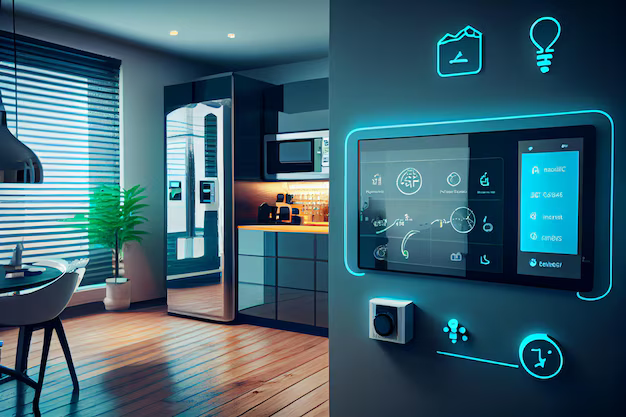
Going into 2026, the concept of the smart home no longer dwells in the realm of fantasy but has rather materialized into everyday life. Homes will no longer be just a place to live but an intelligent environment that knows the user’s habits, automatically responds to needs, and creates a lifestyle of efficiency, security, and comfort. Smart home innovation now delivers one essential promise: a simpler way of living.
Introduction to Smart Home Evolution Technology

Although not entirely new, the face of smart home technology has recently been developing at a great rate for the last five years. In 2026, smart home ecosystems are going to be more advanced and seamlessly connected through the maturity of IoT technologies, AI, and faster and more stable internet connectivity.
House appliances now include the integration of lighting systems, air conditioners, refrigerators, washing machines, and so on, which communicate with one another. No more waiting for the manual command to cool rooms when the temperature goes high or to turn off the lights when space is unoccupied; rather, it invents homes to support daily life.
Innovations That Simplify Everyday Living
Living in a smart home in 2026 is personal and intuitive. One can only imagine waking up to the opening of curtains with the sunrise, soft music playing, and a virtual assistant calmly telling one about one’s day’s schedule. It all happens without touching a single switch.
The most meaningful innovation is automated energy management. Smart homes constantly monitor energy use and shut down unused devices in real time. Besides saving on an electricity bill, it also supports sustainable and ecological living.
Biometric technology has also become commonplace. Systems for the recognition of faces and voices substitute for keys and access cards. The doors unlock the very moment they recognize an authorized user, thus bringing convenience with greatly improved security.
Advanced home security systems

Security is one of the major keys in the development of smart homes. In 2026, home security systems include intelligent cameras, motion sensors, and AI-enhanced analysis. Such cameras record a lot more than just footage—they are able to trace each of the family members, familiar guests, and unknown people.
If any suspicious activity is detected, this immediately sends alerts to the homeowner’s smartphone. In the event of any emergency-for example, a fire or gas leak-it can automatically call emergency services. The protection afforded by this gives owners immense peace of mind, especially for those who travel a lot or have multiple properties.
Total Control with Smartphones
The smartphone has now become the control center of smart homes. One app can control the lighting, temperature, security systems, and even garage doors from any part of the world. It’s now easy to turn on the air conditioner before arriving home or check kitchen appliances from the office with ease.
This can be assured only when user-friendly interfaces make smart home technology accessible not only to tech enthusiasts but also to day-to-day users of all ages.
Challenges and the Way Forward

Despite its beneficial nature, smart home technology has challenges yet to be surmounted. Key concerns include the protection of data and privacy due to the enhanced circle of exposure to cyber threats with an increase in numbers of connected devices. Protection of personal information calls for strong encryption and a secure system.
On the other hand, there are still a lot of smart home devices that can be rather costly. Of course, prices will drop in the upcoming years as more and more people adopt the technology.
Final Thoughts
Smart Home 2026 is not a vision of the future; it is the present. With the integration of IoT, AI-driven automation, and digital control, homes are getting smarter, more responsive, and deeply personalized. Smart homes are no longer just a fashion statement for modern living but a prudent way of living safely, efficiently, and intelligently.

